
On June 30, mining and metals giant Vedanta, announced that it had decided to initiate a strategic review of its steel and steel-making raw material businesses. The review would begin immediately and evaluate a broad range of options, including but not limited to a potential strategic sale of some or all of the steel businesses, the company said in its stock exchange filing. The signs have been there - approaches had been made to steel players over the past year. Last December, Anil Agarwal, chairman Vedanta group, told Business Standard that the steel plant capacity was about 3 million tonnes (mt).

India's aviation industry could return to profitability in 2023-24 for the first time since the pandemic. The industry may pare aggregated net loss by 75-80 per cent year-on-year (YoY) to between Rs 3,500 crore and Rs 4,500 crore in 2022-23 (FY23), compared with Rs 17,500 crore of net losses in 2021-22 (FY22). A combination of recovery in passenger volumes and easing cost pressures due to stable fuel and foreign exchange (forex) costs could spark a turnaround. CRISIL says domestic and international passenger traffic recovered to 90 per cent and 98 per cent, respectively, of pre-pandemic traffic (2019-20, or FY20), in April-December 2022, compared with April-December 2019.
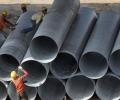
Strong demand in the domestic market, coupled with an increase in raw material prices, is pushing up steel prices. According to SteelMint, a market intelligence and price reporting firm, the list price of flat steel has seen an increase of Rs 750-2,000 per tonne for October deliveries. The long steel price witnessed an increase of Rs 1,500 per tonne towards the end of September.

The roads in India is a powerful stimulant to rural employment. It will have a strong multiplier effect on the local economy, says Subir Gokarn.

During 2023, the Indian real estate sector - both housing and commercial - witnessed buoyancy fuelled by demand, supply, and absorption, and the sector is banking on the upcoming Budget to keep the momentum going. Mumbai-based Sattva Group wants the government to focus on the critical pillars for long-term growth. The company emphasised on the infrastructure boom with increased allocation, lower goods and services tax (GST) rates, incentives for affordable housing and single-window clearance to fast-track projects and support liquidity.

Megha Engineering and Infrastructure, the little-known Hyderabad-based firm that in recent years won the prestigious Zojila tunnel deal among other projects, forayed into city gas and acquired a media group, was the second largest donor to political parties using electoral bonds.

Any government support or incentive to help exporters deal with high freight and insurance costs is unlikely.

Investments worth more than Rs 80 trillion are expected in roads, railways and urban infrastructure between now and FY30 and the supply chains helping to build this core infrastructure are also readying to cash in on the growth. In the first half of the current financial year, orders worth more than Rs 2.6 trillion were tendered in the roads and railways segment alone, according to data sourced from ICRA Ratings and Research. "India's transportation infrastructure sector is in high gear, and we enjoy a sizable share of it," said S V Desai, whole time director and senior executive vice president (Civil Infrastructure) for Larsen & Toubro.

Rekha Jhunjhunwala's net worth has increased by more than 7 per cent, or Rs 2,865 crore, compared to less than 1 per cent rise in the BSE Sensex.

India always faces a Hobson's choice as far as feeding coal-fired generators goes - even if the government is reluctant to admit it. The country cannot do without shipping in the world's most polluting fuel from overseas. And it will continue to do so unless it decides to reduce demand by forcing citizens, farmers and businesses to live without electricity for part of the day, or use diesel generators to fire facilities.

FMPs remain an option for investors who believe interest rates could head downward over time and wish to lock in the current rates. TMFs have very low expense ratios, which makes them cost-efficient.
McGraw-Hill and S&P India on Monday revised upwards their offer price by about 14 per cent to Rs 775 per share to acquire up to 65.57 per cent stake in credit rating agency Crisil.\n\n
Economy is slated to grow by 7.1 per cent this fiscal after the excellent monsoon although fiscal deficit may overshoot the target, credit rating agency Crisil said on Monday.

The Department of Investment and Public Asset Management (Dipam) has asked ministries, government departments, and public sector undertakings (PSUs) to send a list of assets that can be monetised under the proposed National Monetisation Pipeline. The list will be used for creation of an asset monetisation dashboard, which will keep a track of such assets. The government, meanwhile, has asked CRISIL to prepare a road map for monetising assets of PSUs and government departments.

The Interim Budget for 2024-25 (FY25) to be presented on February 1 is likely to assume 10-10.5 per cent nominal gross domestic product (GDP) growth against 8.9 per cent estimated for FY24 by the National Statistical Office (NSO). "We were waiting for the First Advance Estimates GDP numbers for FY24. "We will finalise the nominal GDP growth assumption for FY25 Interim Budget in a couple of days.

A prolonged break in monsoon rains in most parts of the country is threatening to hit the yield of kharif crops. It could even delay the upcoming rabi sowing. Major agricultural states, such as Maharashtra, Madhya Pradesh, Andhra Pradesh, Punjab, and Gujarat, have witnessed a deficit of 30-80 per cent in southwest monsoon rainfall in August compared to the long-period average for the month. Meteorologists see no big revival in monsoon rains from hereon, though they forecast "some activity" over the Bay of Bengal on September 5-6.

In an interview with BS, Roopa Kudva appears most excited about climate change. Another area is the grading of listed equities which, according to her, is an extension of IPO-grading.

The dreary, cold months from December to February may prove to be the undoing of many a nation as they grapple with sky-high fuel prices - a result of the Ukraine conflict and the pandemic. Many - Europe, South Korea, Japan, and China - will still pull through on the strength of their wealth or because of strong storage infrastructure. But India will have its back to the wall. Signs of liquefied natural gas (LNG) rates hitting new records this winter are already evident.

Following are comments from economists at leading financial institutions, banks and rating agencies on the interim Budget:
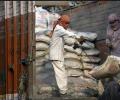
With another quarter of steady growth in demand, cement companies are expected to report strong year-on-year (Y-o-Y) growth in earnings, according to analysts. The September quarter (Q2FY24) also witnessed a resumption of price hikes in certain markets. UltraTech Cement, India's largest cement producer, reported a 15 per cent Y-o-Y increase in cement sales in the country for the quarter under review.

"We will raise Rs 300 crore via bonds of two-, three- and five-year tenures. This will be our maiden bond issuance and is part of our effort to widen funding sources," says Vimal Bhandari, executive vice-chairman and chief executive officer (CEO), Arka Fincap. The firm, a subsidiary of Kirloskar Oil, is only five years old and small (assets of around Rs 5,000 crore with an "AA" rating), but the response to this float will be closely watched: It would be the first by a non-banking finance company (NBFC) after Mint Road upped the risk weights on bank exposures to them by 25 percentage points. The move by the Reserve Bank of India (RBI) has caught NBFCs off guard even though the issue had been flagged by Governor Shaktikanta Das with their corner-room occupants (and that of banks) in July and August 2023 - on consumer credit and the dependency on bank borrowings.

The Reserve Bank of India's (RBI's) decision to withdraw the incremental cash reserve ratio (I-CRR) is expected to benefit banks during the festival season. They are likely to increase deposit rates by up to 25 basis points (bps) in select maturity buckets. The rise in demand for funds to cover tax payments and meet quarter-end business targets could influence rate decisions by banks, according to bankers and money market executives.

New Delhi's timing couldn't have been worse, both for India's fledgling electric vehicle (EV) sector and prospective electric bike buyers. It was hard to miss the perfect storm brewing for India's EV industry since early 2022. On one hand, you had several accidents involving battery fires that unnerved consumers; on the other, uncertainty had crept in over subsidies.

India Inc is set to post an 18-20 per cent revenue growth for July-September as compared to the year-ago period, domestic rating agency Crisil said on Thursday ahead of the filing of quarterly earnings by companies. The handsome growth in the topline will be driven by both higher volumes and higher commodity prices, the rating agency said. However, the rising input prices may have capped operating profit margin expansion for companies when compared to the preceding quarter, the agency said.

Global rating agency S&P on Tuesday said even though the US and the Euro zone are headed to recession, India is unlikely to face the impact given the "not so coupled" nature of its economy with the global economy. "Indian economy is a lot decoupled from the global economy than we normally think of, given its large domestic demand, even though you (India) are a net importer of energy. "But you have enough forex reserves on one hand and your companies have managed to maintain healthy balance sheets," Paul F Gruenwald, S&P global chief economist and managing director, told reporters in Mumbai.

The inactivity of Go First may help other airlines in India's competitive market as it had a 7.8 per cent market share.

Alternative investment funds (AIFs) - pooled investment vehicles catering to high net worth individuals (HNIs) - saw a 30 per cent increase in investment commitments during financial year 2022-23 (FY23). At the end of March 2023, the total investment commitments raised stood at Rs 8.33 trillion, up Rs 1.92 trillion from Rs 6.41 trillion at the end of March 2022. A commitment is the money clients are willing to put into AIFs.

The two-wheeler segment is, however, still far from its H1FY19 peak of 9.7 million units

Vedanta group chairman, Anil Agarwal, 69, is well known for his business journey from a scrap dealer from Bihar to a London-based globe-girdling metal and oil and gas conglomerate with revenues of $19 billion. Now his abilities to keep his group from over-leveraging itself will be put to the test. Over the years, Agarwal, now based in London, set up the conglomerate via acquiring iron ore producer Sesa Goa, Cairn's oil producing assets in India, and Electrosteel Steel.

Debit card payments remained sluggish due to the surge in digital transactions after the pandemic, and the Unified Payments Interface (UPI) has emerged as the most popular mode of money transfer, particularly for small value transactions, according to RBI data. In July 2020, the total debit card spends stood at Rs 2.81 trillion, as compared to Rs 3.15 trillion in July 2023, reflecting a growth of 11.96 per cent. UPI spends have seen a whopping growth of 428 per cent, zooming from Rs 2.90 trillion to Rs 15.33 trillion during the same period, the data revealed.
Vedanta Limited (Vedanta) helping its parent and group holding company Vedanta Resources to deleverage its balance sheet has started to strain its balance sheet. Vedanta's gross debt (consolidated) was up 24.3 per cent year-on-year (YoY) in FY23 and reached a six-year high of Rs 66,628 crore by the end of March. Similarly, its net debt went up 20.3 per cent YoY to Rs 45,706 crore at the end of FY23, up from Rs 38,228 crore a year ago; it was the highest since FY20.
The festive season will mean business for the steel industry as it is the time when automotive and consumer appliance companies bump up demand to prepare for higher sales, experts have said. Ranjan Dhar, chief marketing officer at ArcelorMittal Nippon Steel India (AM/NS India), said that bookings by auto and consumer appliance industries are 20 per cent higher ahead of the festive season compared to last year. "While this could be for a couple of months, it could normalise later at approximately 10 per cent," he said.

Since its launch in late March after India went into a lockdown, concerns about transparency have been expressed about the PM-CARES Fund

India's jugalbandhi with coal and clean energy is coming unstuck, neither achieving adequate renewable generation nor ensuring sufficient coal-fired power in the quest to become a $5-trillion economy. Six months have elapsed since Prime Minister Narendra Modi announced an ambitious climate agenda for India at COP26 at Glasgow. The net zero emissions target by 2070 is a distant one, but there are nearer-term plans to meet 50 per cent of energy demand with renewables by 2030 by increasing capacity to 450 Gw. A cursory look at the balance sheet of India's climate progress since November reveals ponderous progress towards meeting the renewables target even as the country is scrambling to expand coal-fired generation in the face of a power crisis.

That would reverse the growth trend of around 11 per cent per annum, which the industry has logged over the past ten years, making it one of the most adversely-affected sectors of the economy.

The affordable housing segment may be seeing an uptick which is a good sign of consumption momentum. This is the biggest-ticket purchase for middle income and lower income families. The current activity is at least partly driven by a pause in interest rate hikes.

Unprecedented rains and floods in the northern region in the past few days have not only caused extensive damage to lives and property but have also impacted business and commercial establishments. Vegetable prices have gone through the roof in the national capital and many other parts of the country since rains started pouring earlier this month. Traders say vegetable prices would come down only after roads open and skies clear, even as water in the fields will take time to recede.
Corporate India's credit quality showed a sharp improvement in the second half of FY22, but high input prices and withdrawal of pandemic-related relief measures can pose pressures in the new year, rating agencies said on Friday. Crisil Ratings, which rates a large number of financial sector entities, reported an improvement in the credit ratio -- the number of upgrades to downgrade -- to 5.04 times in the second half of this financial year, from the 2.96 per cent in the first half of the fiscal. It attributed the improvement to a sustained rebound in demand, which lifted revenues of most sectors to pre-pandemic levels and proactive relief measures by the government that cushioned the pandemic blow.

Analysts are divided on their retail price inflation forecast, with some saying the first quarter numbers will overshoot the RBI target by as much as 60 bps while others are softer in their estimate. Consumer price inflation retreated from its 15-month peak of 7.4 per cent in July to 6.8 per cent in August, much lower than the market expectations, despite vegetable prices remaining elevated at 26.1 per cent. Food inflation eased to 9.9 per cent from 11.5 per cent, led by some cooling of inflation in vegetables, cereals, pulses and milk.

Even before NCP-Ajit Pawar leaders came to meet in Delhi, the central government decided to buy 200,000 tonnes of onions from farmers at Rs 24.1 per quintal. This was among the highest prices at which onions have ever been bought from farmers.
 © 2026 Rediff.com - Advertise with us - Disclaimer - Privacy Policy - Sitemap - Feedback - About us - Terms of use - Grievances